Industry News

Comprehensive Upgrades: Large-Scale 5H Inspations Launched Targeting Chinese Containers
Since early February 2026, U.S. Customs has initiated large-scale "5H" inspections targeting imported goods from China. These inspections are led by the newly established "FAST DOC REVIEW" department, which strengthens the verification of importer qualifications and examines the authenticity and consistency of documentation submitted for customs clearance. This has directly led to an increase in the rate of 5H inspections at various ports, with thousands of Chinese containers already detained or subject to compulsory re-exportation. Once a shipment is placed in "5H" status and issues are confirmed, the system status is immediately tagged as "Entry Processing Hold." If a documentation review is involved, the process typically takes 3–5 business days. Should problems be found with the documents, it will lead to further inspection steps such as physical examination. Ultimately, based on the results of the full-process verification, CBP will make corresponding disposition decisions, such as imposing additional duties, ordering destruction, or mandating re-exportation, with the high probability of return by customs.
5H Inspection: Enhanced Document Verification and Physical Cargo Inspection
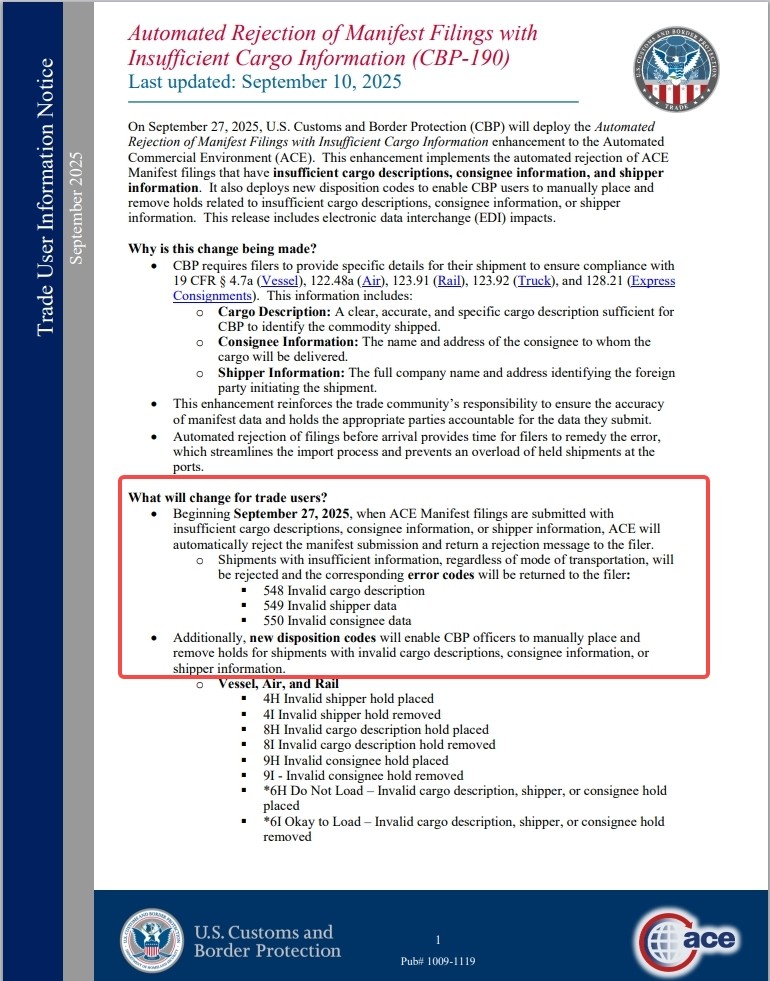
CBP inspections are mainly divided into four categories: document verification, non-intrusive inspection (scanning), physical examination, and specialized audits. Since September 27, 2025, U.S. Customs and Border Protection (CBP) has implemented functionality for the "Automated Rejection of Manifest Submissions with Incomplete Cargo Information," integrating it into the Automated Commercial Environment (ACE). When a customs declaration document lacks cargo descriptions, shipper, or consignee information, the system will automatically reject the submission.
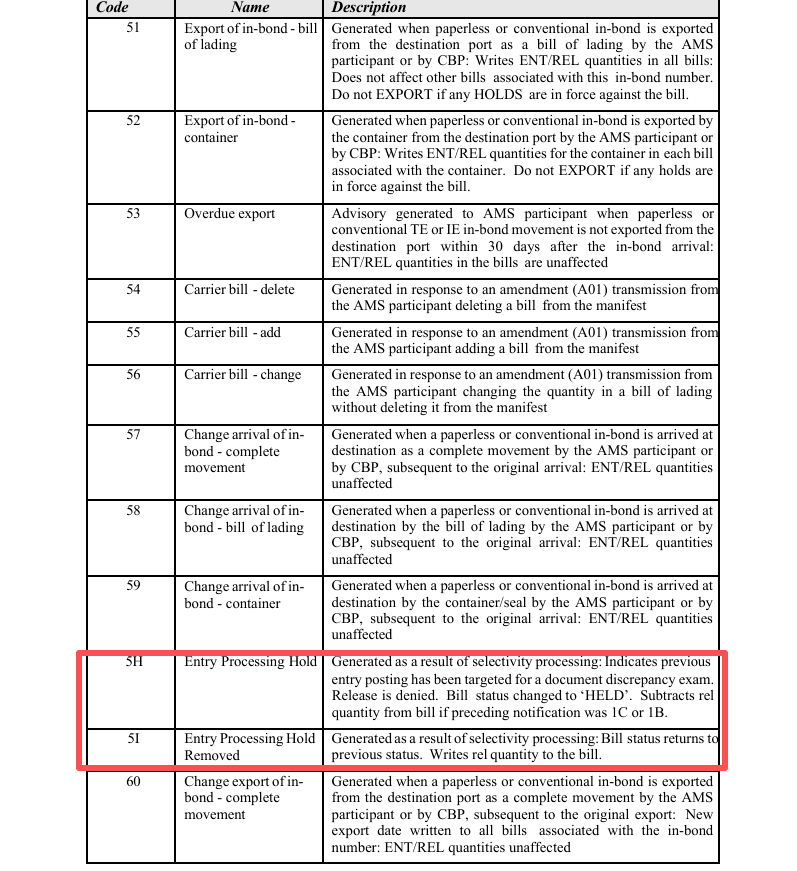
H and I correspond to the following status commands:
H = HOLD: The cargo is locked/re strained.
I = Release: The hold is lifted.
5H inspection intensifies document review. It first conducts an in-depth review of the complete set of customs declaration documents (invoice, packing list, bill of lading, licenses, certifications, etc.). If the documents are free of issues, the shipment is released directly (5I). If problems are found, it proceeds to a physical inspection, potentially leading to detention or return.
The first stage relies on the customs data system to cross-validate information such as declared value, HS code accuracy, product description standardization, and the importer's bond status. When significant discrepancies between the declared information and historical transaction data, or overly vague product descriptions, are identified, the system may trigger further scrutiny.
The second stage involves opening the container to physically verify the cargo, ensuring consistency between the actual goods and the declared documents. Based on the current situation, this inspection wave places higher demands on customs clearance compliance, particularly concerning the authenticity of the importer's identity and the accuracy of tariff classification. Operations that previously relied on "DDP service" or used bonds in a non-standard manner currently face relatively higher inspection risks.
Local Multi-Warehouse Network: Building a Compliance "Breakwater"
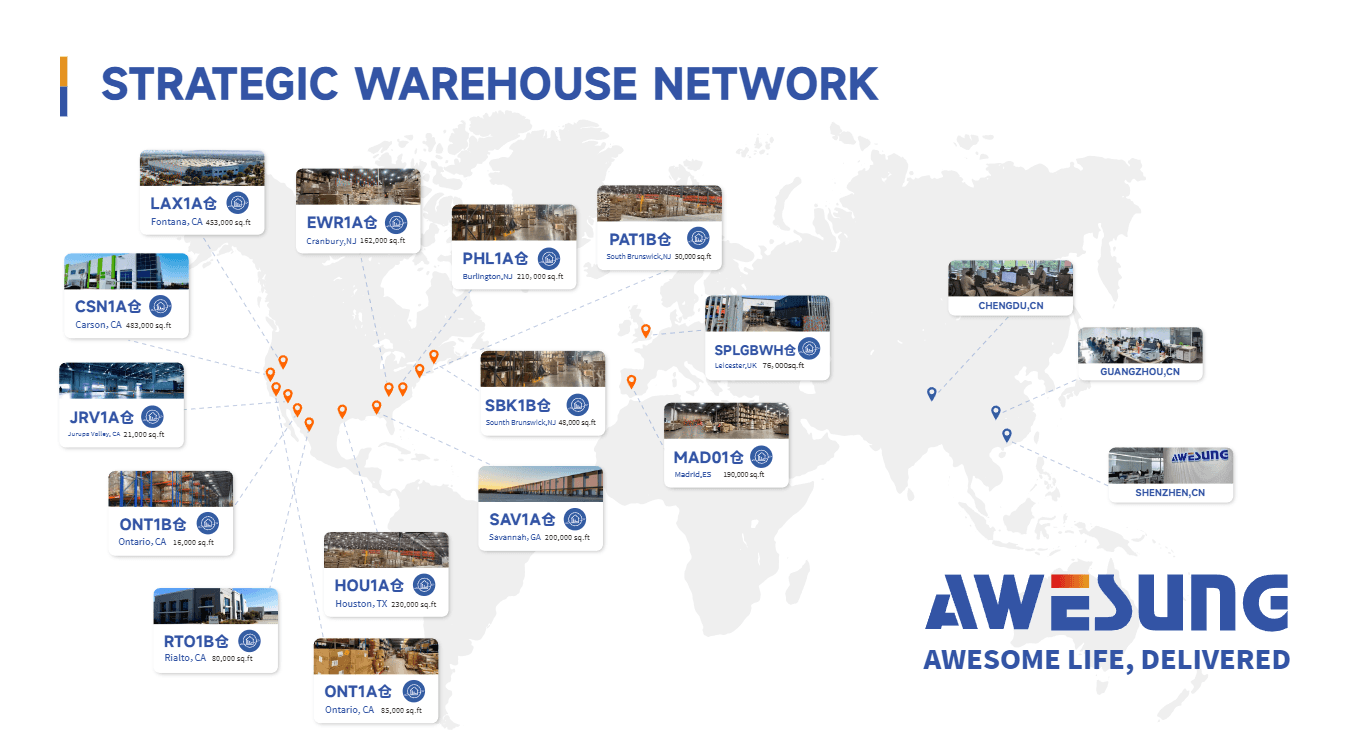
Against the backdrop of tightening U.S. import reviews, enhancing the compliance level and risk resilience of the supply chain has become a key focus for many cross-border businesses operating between China and the U.S. AWESUNG, a U.S.-based overseas warehouse provider, leverages its multi-warehouse network and local service capabilities to offer a feasible support solution for cross-border enterprises navigating inspection fluctuations.
Proactive Risk Control to Minimize Oversights
Implement pre-shipment compliance audits to ensure proper declaration. Prepare compliant certifications in advance and ensure declarations are truthful, specific, accurate, and supported by complete and consistent documentation. AWESUNG Group's professional international logistics full-link service team, with over 10 years of industry experience, can assist sellers in conducting preliminary compliance self-checks on customs clearance documents before shipment, facilitating smoother customs clearance for cross-border stocking.
Buffer Zone via Storage for Re-exported Goods
For goods that have already faced inspections and received re-exportation notices, an option is to transfer the cargo to a bonded warehouse for temporary storage. AWESUNG owns compliant bonded warehouses in the U.S., where operations such as relabeling and repackaging can be carried out. Once compliance conditions are met later, replenishment can be re-arranged, minimizing potential cargo loss.
Decentralized Storage to Reduce Reliance
Exporters to the U.S. can strategically plan distributed warehousing and shipping based on sales distribution and replenishment rhythms. If inspections cause congestion at one port, inventory located in other regions can still support normal replenishment, helping to mitigate the overall impact on sales. AWESUNG has warehouse resources in multiple locations across the U.S., including New Jersey, Los Angeles, Atlanta, and Houston, assisting cross-border enterprises in warehouse and distribution management.
The 2026 US-bound logistics environment places an increased emphasis on customs clearance compliance. For export-oriented businesses focused on long-term, stable operations, strengthening partnerships with supply chain providers that possess local service capabilities and strong compliance awareness is an effective strategy to navigate inspection fluctuations and ensure business continuity. AWESUNG remains committed to building a new ecosystem for global smart logistics, making global delivery a solid cornerstone for a better life, connecting the world, and empowering the future.