Industry News
For the international logistics industry, the peak season is still running while the U.S. shipping market is already bracing for a new wave of rate increases.
Major U.S. carriers UPS, FedEx, and USPS have recently announced new rate adjustments set to take effect between late 2025 and early 2026, with average base rate increases all reaching 5.9%. As domestic logistics costs rise, e-commerce platform affiliates may face further challenges for profit margins.
UPS Rate Adjustments
UPS's new rates will take effect on December 22, 2025.
According to the official UPS announcement, this adjustment involves not only an increase in base rates but also changes to various surcharges.
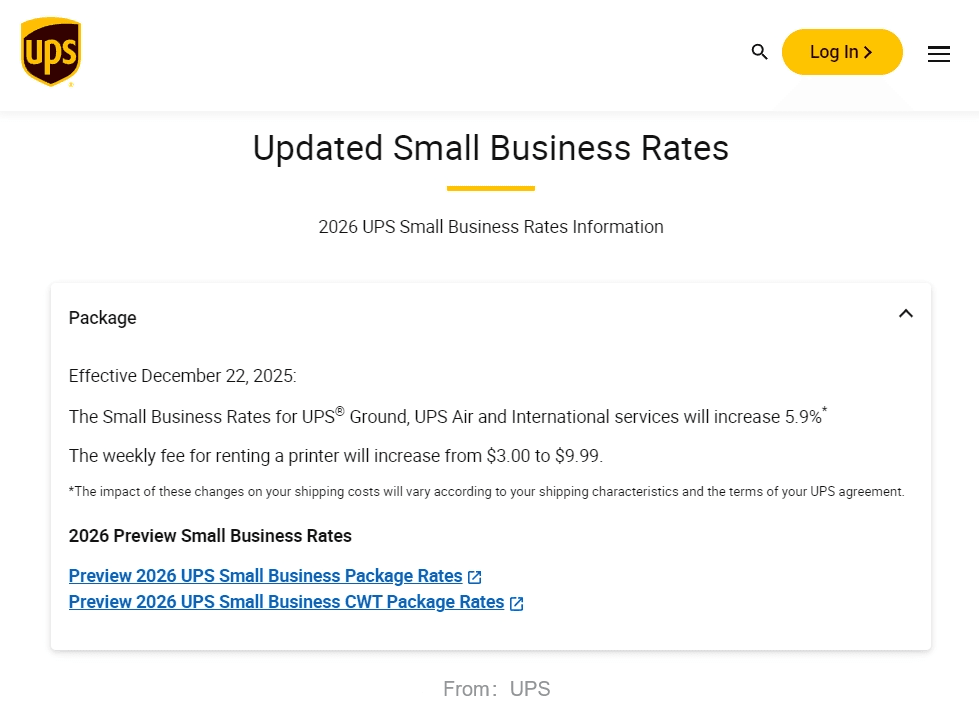
Key Points of UPS's 2026 Rate Adjustment

Notably, UPS is not applying a standardized increase. The residential surcharge will rise by approximately 6.6%, while the remote area surcharge for Alaska routes will see a 6.9% hike.
Additionally, UPS is modifying its billing method for high-volume clients. Customers shipping over 20,000 packages per week will be charged a dynamic surcharge based on actual shipment volume, rather than the previous flat fee.
USPS Rate Adjustments
USPS submitted its price adjustment proposal to the Postal Regulatory Commission in mid-November and got approved. The new rates are scheduled to take effect on January 18, 2026.
Unlike UPS and FedEx, USPS is not implementing an increase by percentage. Instead, adjustments will vary based on delivery zone and package weight.

Key Points of USPS's 2026 Rate Adjustment
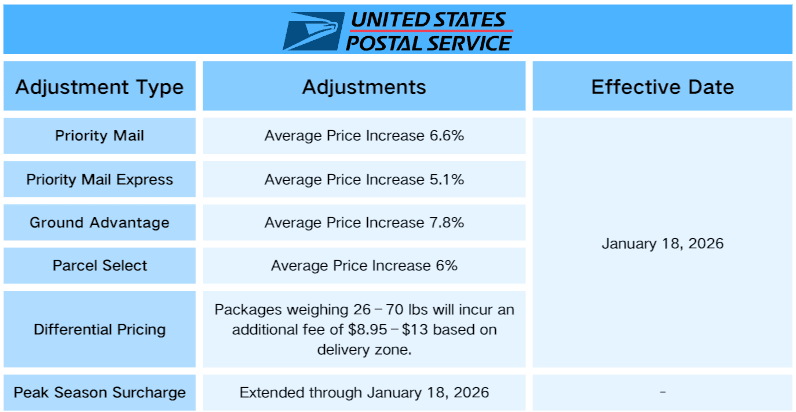
The average increase across various USPS services this time not only exceeds its own rate hikes from the previous year but is also higher than the 2026 rate increases previously announced by UPS and FedEx.
FedEx Rate Adjustments
FedEx's rate hike plan is more complex and will be implemented in two phases.
The base rate adjustment takes effect on January 5, 2026, while the new dimensional (DIM) weight and weight standards will begin on January 12, 2026.

Key Points of FedEx's 2026 Rate Adjustment
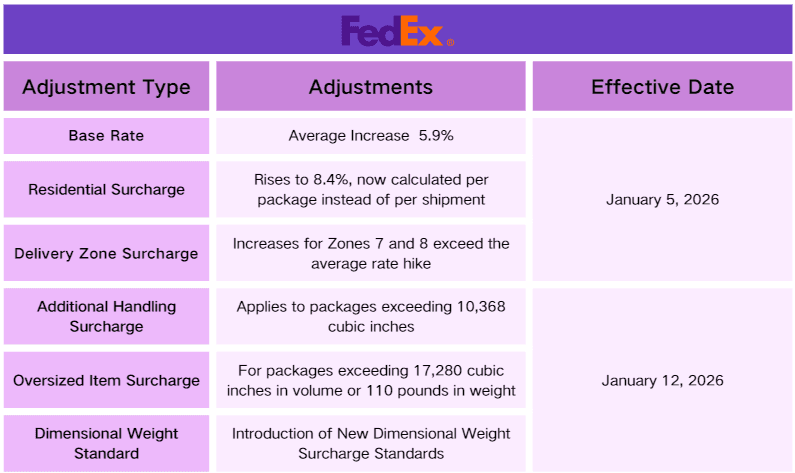
Among FedEx's changes, the modification to the residential surcharge calculation method is particularly significant for cross-border e-commerce.
The new "per-package" calculation means that if a single order contains multiple packages, costs will increase substantially.
Furthermore, FedEx is introducing new dimensional weight surcharge standards. Some packages that were previously only subject to overweight fees may now be classified as oversized under the new rules, probably increasing costs by tens or even hundreds of dollars.
Impact of the Rate Hikes
This wave of rate increases will significantly impact cross-border businesses.
Actual cost increases far exceed 5.9%: When surcharges for residential delivery, remote areas, oversized items, etc., are factored in, the actual increase is likely to be higher than 5.9%.
Surge in cost for multi-package orders: FedEx's "per-package" residential surcharge means the surcharge for a 10-package order increases tenfold.
Unpredictable remote area delivery costs: USPS's additional fee for heavy items in zones 5-9 is up to $13, while UPS's Alaska route surcharge exceeds $46 per shipment.
Substantial increase in logistics costs for large items: FedEx's new dimensional weight rules may push some packages into higher billing tiers, increasing costs by tens to hundreds of dollars.
Reduced bargaining power for SMEs: Large enterprises may still negotiate discounts, but small and medium-sized enterprises (SMEs) may have no choice but to absorb the price hikes, further squeezing their profits.
Corporate Coping Strategies
Faced with rising costs, businesses can adopt the following strategies to mitigate the impact:
Optimize Packaging Dimensions: Re-evaluate product packaging to reduce volume without compromising protection, thereby avoiding triggering high surcharges. Consider splitting products over 110 lbs into multiple packages.
Budget Planning in Advance: Calculate 2026 logistics costs based on the new rate sheets from various carriers to inform pricing strategies.
Diversify Logistics Channels: Avoid reliance on a single carrier. Utilize a mix of carriers based on different order characteristics.
Implement Smart Distributed Inventory: Pre-position goods in warehouses across different U.S. regions to reduce the proportion of long-haul shipments to zones 7-8 and lower last-mile delivery costs.
Leverage the Advantages of Overseas Warehouse: By shipping locally from U.S. overseas warehouses, businesses can use services like USPS Ground Advantage or FedEx Ground local services, avoiding international remote area surcharges and cross-border handling fees, effectively reducing costs. Partnering with overseas warehouses that support fulfillment (dropshipping) can further reduce costs and increase efficiency by leveraging their channel advantages.
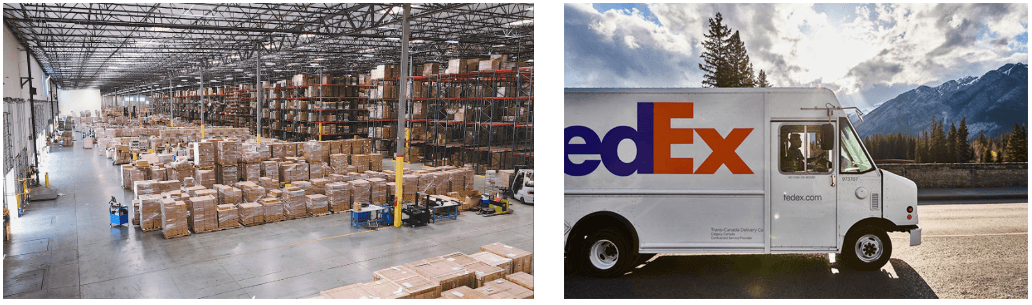
AWESUNG: Your Strategic Partner for Navigating Logistics Challenges
As a leading provider of e-commerce warehousing and logistics solutions in North America and Europe, AWESUNG offers robust localized support for cross-border e-commerce, backed by solid infrastructure and technological strength:
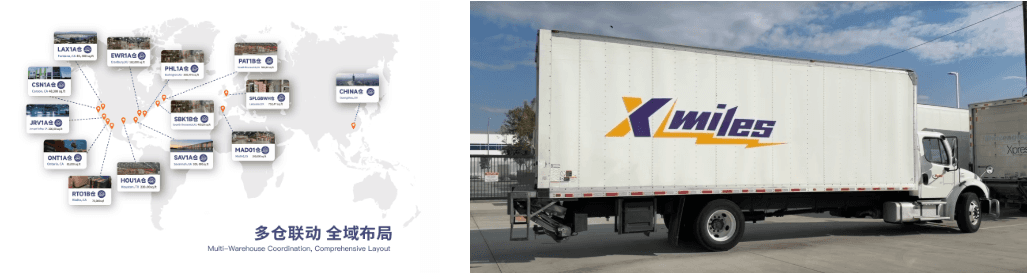
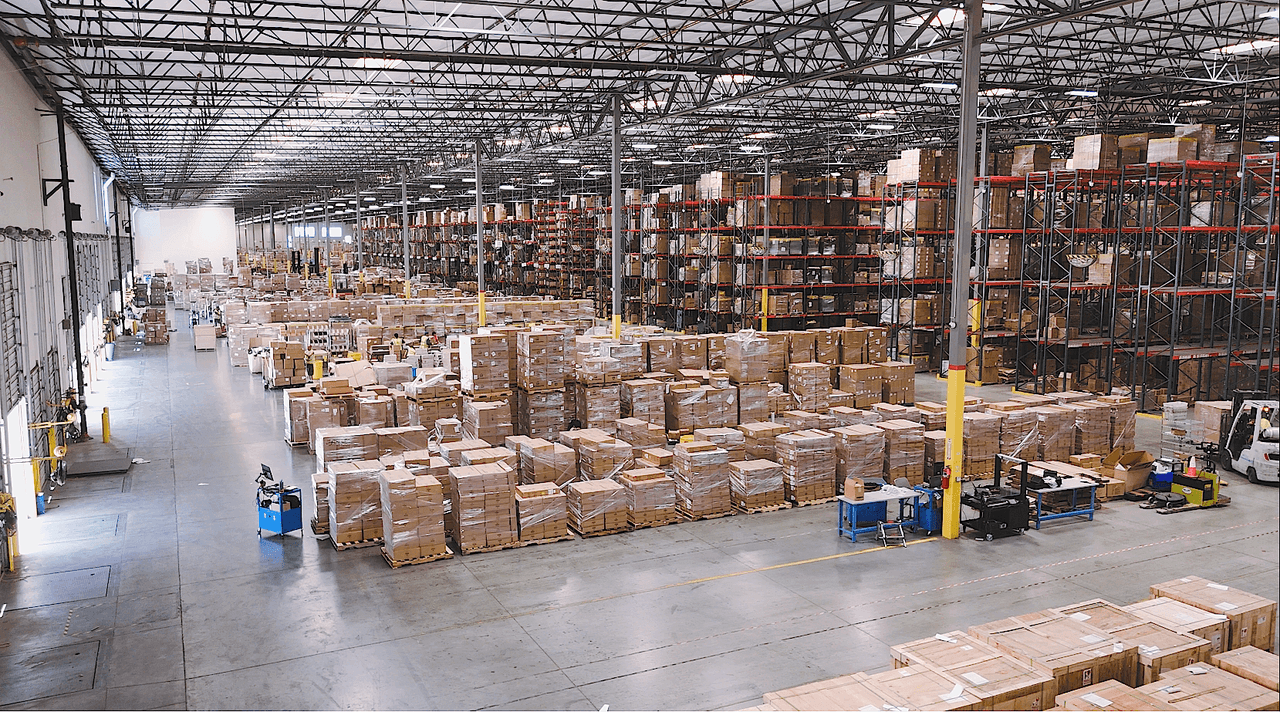
Strategic Four-Warehouse Network Layout: AWESUNG's overseas warehouses are strategically located near four major U.S. ports, with 14+ self-operated facilities measured over 2.5 million square feet, creating a logistics network that radiates across the entire United States.
Fulfillment (Dropshipping) Support: Our overseas warehouses support fulfillment. Our self-developed systems enable seamless integration with multiple platforms, ensuring orders are synchronized with the warehouse immediately after a customer places an order.
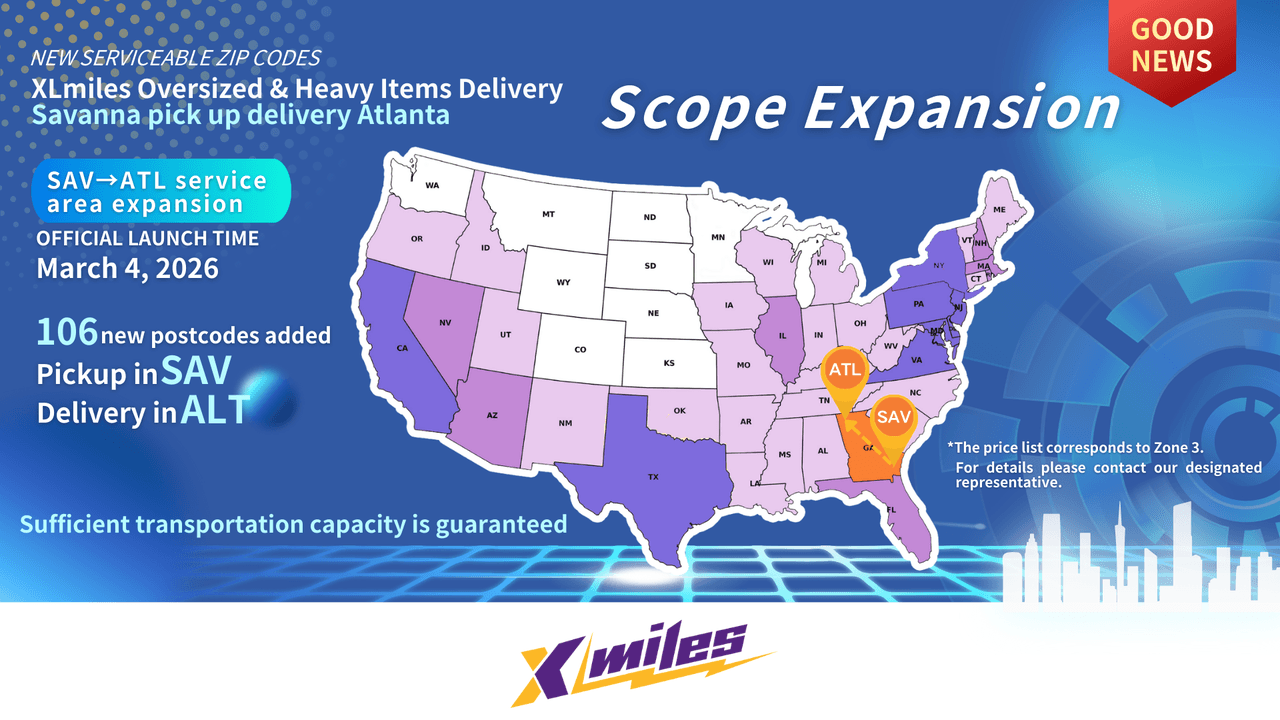
Last-Mile Large Parcel Delivery: AWESUNG operates its own brand, XLmiles, specializing in local delivery of large items within the U.S. The ongoing promotion, '50% off for the second piece', can help businesses reduce logistics costs and improve efficiency.